VEVOR Electric Hoist Review
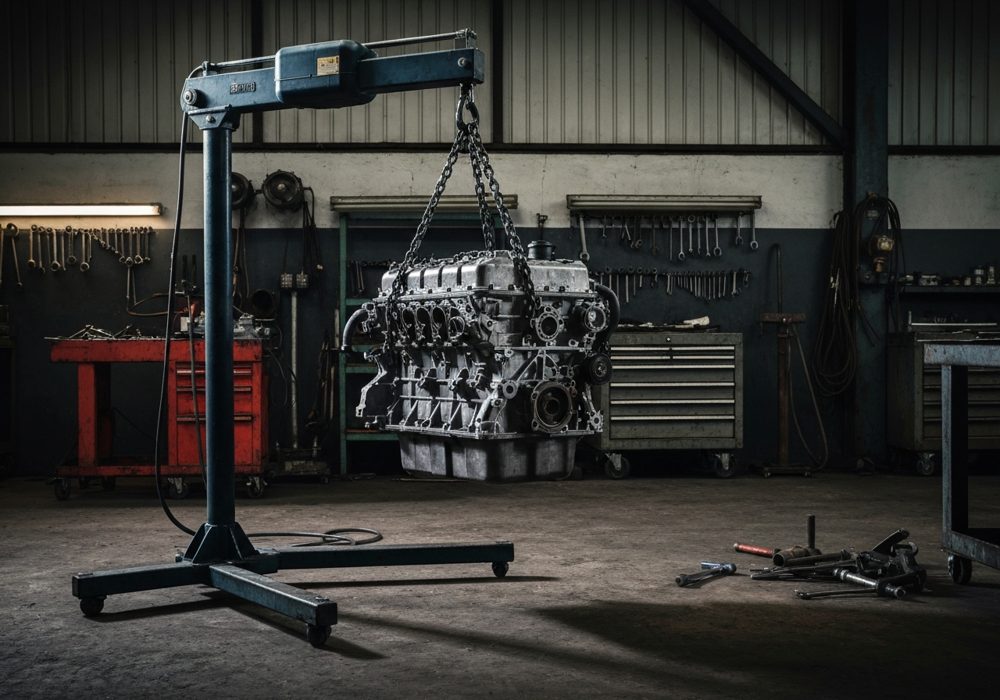
VEVOR's electric hoist is the product that built the brand's workshop reputation: branded-level lifting capacity at a price that looks almost suspicious. After hanging engines, gearboxes and the odd awkward machine off one, here's our honest read on what you get — and where the corners were cut.
Capacity and safety margin
The headline number is the easy bit; the discipline is in how you use it. VEVOR hoists are sold across a wide range of ratings, and in our testing the rated capacity is honest enough — a unit will lift its stated load. What we won't do is lift to the limit. We treat the rating as a ceiling to stay well under, keeping the working load to roughly two-thirds of the figure. That margin absorbs the shock load when a stuck part suddenly breaks free, and it keeps the motor and gear train out of the stress zone where budget components fail first. If your heaviest realistic lift is 400 kg, buy a 600 kg-class hoist, not a 400.
Duty cycle
This is the spec most buyers miss. An electric hoist is rated for intermittent, not continuous, work — a typical figure is around 20 percent, meaning roughly two minutes of actual lifting in any ten-minute window before the motor needs to cool. That's plenty for normal garage and workshop tasks, where you lift, position and stop. It is not enough for repetitive production lifting; do that and the motor runs hot, the thermal cutout trips if you're lucky, and the windings cook if you're not. Plan your lifts, and give the motor its breathers.
Build quality
The casing, gear housing and hook are solidly cast and the steel cable or chain on our sample was properly specified. The mechanical core feels like it'll last. Where you see the price is in the details: the cable guide and limit-switch assembly are the lightest-duty parts, the painted finish is functional rather than pretty, and the supplied hook latch is serviceable but worth inspecting. None of this undermines the lift; it's the usual budget-tool story of a strong core wrapped in modest trim.
Controls and remote
The corded pendant is the dependable option — clearly marked up/down buttons with a positive emergency stop, and no battery to die mid-lift. Some kits add a wireless remote, which is genuinely convenient when you need to watch the load from a few steps back. Treat the wireless as a convenience, not a primary control: keep the pendant connected, never rely on the remote alone for a critical lift, and test the e-stop before every session.
Mounting
A hoist is only as safe as what it hangs from. Mount to a structure rated well above the load — a proper steel beam, an engineered gantry or a rated trolley — never a timber joist of unknown capacity or a bracket you've improvised. Use the supplied mounting hardware as intended, verify the overhead point can take the dynamic load (the jolt of a lift is more than the static weight), and check the fasteners haven't loosened before each use.
Safe-use cautions
Pros and cons
Pros
- Outstanding lifting capacity for the money
- Honest rated capacity with a solid mechanical core
- Reliable corded pendant with a positive e-stop
- Optional wireless remote is a real convenience
- Easy to mount with the right overhead structure
Cons
- Limit-switch and cable-guide parts are the lightest-duty area
- Intermittent duty cycle only — not for production lifting
- Finish and hook latch are functional rather than refined
- Requires a genuinely rated mounting point you must supply
Verdict
For occasional, intermittent lifting in a home garage or small shop, the VEVOR electric hoist is the clearest value pick in our workshop coverage — it delivers capacity that rivals far pricier brands if you respect its limits. Buy with capacity headroom, honour the duty cycle, mount it to something genuinely rated, and it earns its keep. It is not a stand-in for a certified industrial hoist in continuous or critical-lift work. If you're outfitting a shop, pair it with our power tools guide and the sandblasting cabinet review.
Frequently asked questions
What capacity VEVOR hoist should I buy?
Buy a hoist rated well above your real load. A sensible rule is to keep your working load at no more than about two-thirds of the rating, which leaves margin for shock loads and keeps the motor and gears out of their stress zone.
What does the duty cycle mean on an electric hoist?
Duty cycle is the proportion of time the motor can run within a period before it needs to cool. A common rating is around 20 percent, roughly two minutes of lifting per ten minutes. Exceed it repeatedly and you risk overheating the motor.
Can a VEVOR electric hoist be used to lift people?
No. These are material-handling hoists and must never be used to lift, support or move people. Use rated lifting equipment certified for personnel for any such task.
How should the hoist be mounted?
Mount it to a structure rated for well above the load — a proper steel beam, gantry or engineered mount, never a timber joist of unknown capacity. Use the supplied brackets or a rated trolley, and verify the overhead point can take the dynamic load.
Is the VEVOR electric hoist worth it?
For occasional and intermittent lifting in a home or small shop, yes — it delivers branded-level capacity for far less. It is not a substitute for a certified industrial hoist in continuous-duty or critical-lift settings.